
Investment Opportunities
RV Parks
RV Parks Outlook
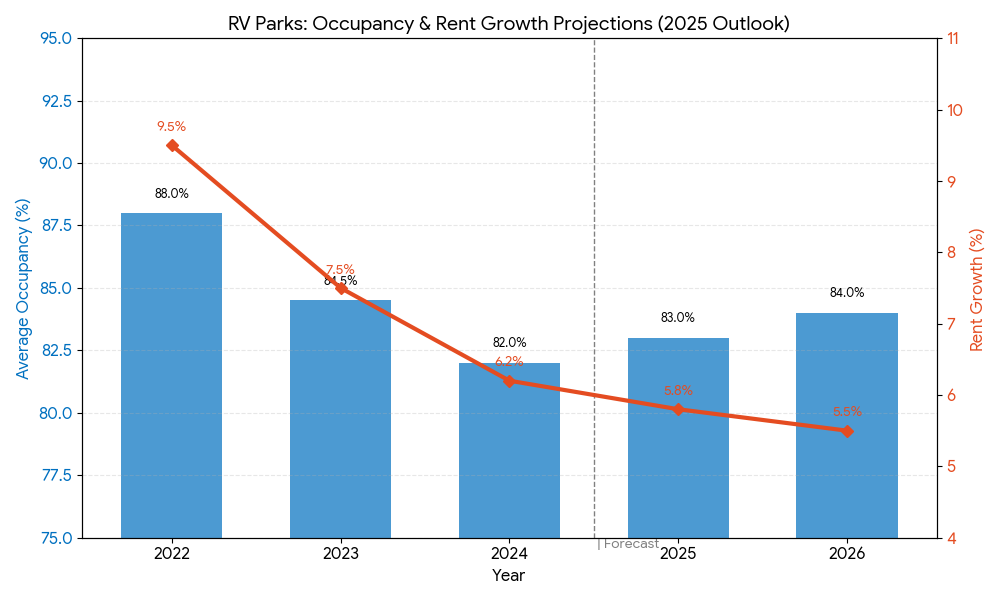
Figure 1: RV Park Occupancy (bar) and Rent Growth (line) by year, with forecasts. High-quality RV parks maintain strong average occupancy, projected to remain near 80–85% (including seasonal variability). Rent growth is expected to stabilize at a healthy 5–7% for premium assets.
Resilient Fundamentals: Lifestyle and Affordability
The RV Park and Campground sector remains attractive due to a powerful dual trend: the continued demand for affordable housing solutions and the growing consumer preference for outdoor, experience-based travel. While the pandemic-era travel boom has moderated, the underlying fundamentals are strong. RV parks are one of the most supply-constrained asset classes, with barriers to new development due to zoning and utility costs keeping existing properties in high demand. Furthermore, the rising adoption of full-time RV living, driven by high real estate costs and flexible work, is boosting demand for long-term rental sites. CMIC analysis shows that parks that have adapted to higher-service offerings, such as luxury RV resorts, can command premium rental rates and maintain superior occupancy.
Consumer Spending and Segment Evolution
Consumer spending in the Outdoor Hospitality industry is shifting from purely transient, short-term camping to more lifestyle-driven, high-amenity resorts. Demand now leans towards upgraded experiences, including quality hookups (50-amp power, full-service utilities), private bath options, and strong Wi-Fi/telecommunications infrastructure . This focus on quality means that properties with superior operational efficiency and a strong amenity package are able to significantly outperform their less-maintained peers. This divergence supports strong rent growth (5–7%) for modernized, well-located parks that meet the needs of the more discerning, and often higher-spending, modern RVer.
Spotlight on Segments: Luxury and Value-Add
Within the fragmented RV park market, two segments offer the clearest opportunities.
Luxury RV Resorts: These high-end properties are capitalizing on the “glamping” trend, attracting investors with projected NOI growth and the potential for high Revenue Per Available Site (RevPAS).
Value-Add Repositioning: Acquiring older, mom-and-pop parks that are currently underperforming and renovating the infrastructure, adding amenities, and professionalizing management. This strategy allows investors to capture significant rent upside, moving cap rates from the 9–12%+ range towards the institutional 5–7% range once stabilized. Key due diligence areas include verifying utility infrastructure (septic/water/electric) and ensuring zoning allows for modern improvements. Investors are also leveraging the tax benefits of Park Model RVs (PMRVs), which offer resort-style lodging and tax-efficient depreciation.
Outlook: Operational Edge for Success
Overall, the RV Park sector offers high potential for cash flow and capital appreciation in 2025. The market is defined by selectivity and operational excellence, requiring a disciplined approach to underwriting. While transaction volume has slowed from the peak of 2022, private equity and mid-market buyers remain active, focusing on value-add acquisitions. For CMIC, RV parks offer high cash-on-cash returns (often targeting 20%) and a significant cap rate premium over traditional real estate assets. We will prioritize parks that are either stabilized, high-end resorts or value-add opportunities with clear operational and infrastructure upgrade plans.
RV Parks Investment Opportunities
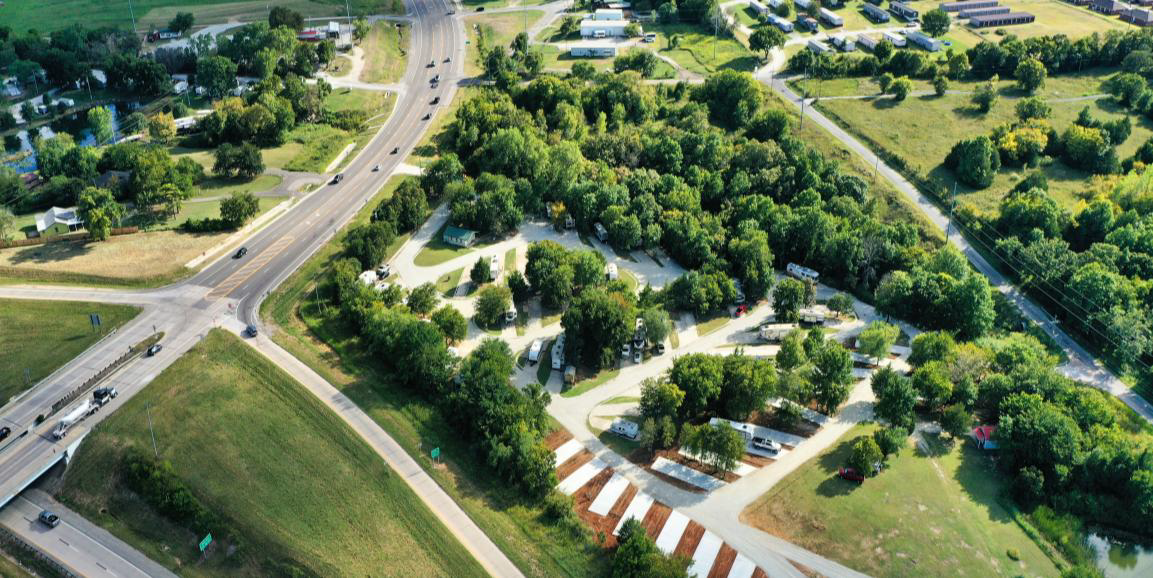
Two Pack RV Park
Ada, OK